关于
About
通过研究与分析,探索《伤寒》的基础理论。
Through research and analysis, we explore the fundamental theories of “Shanghan Lun”
Scroll For More
《傷寒》的理论体系及其特点
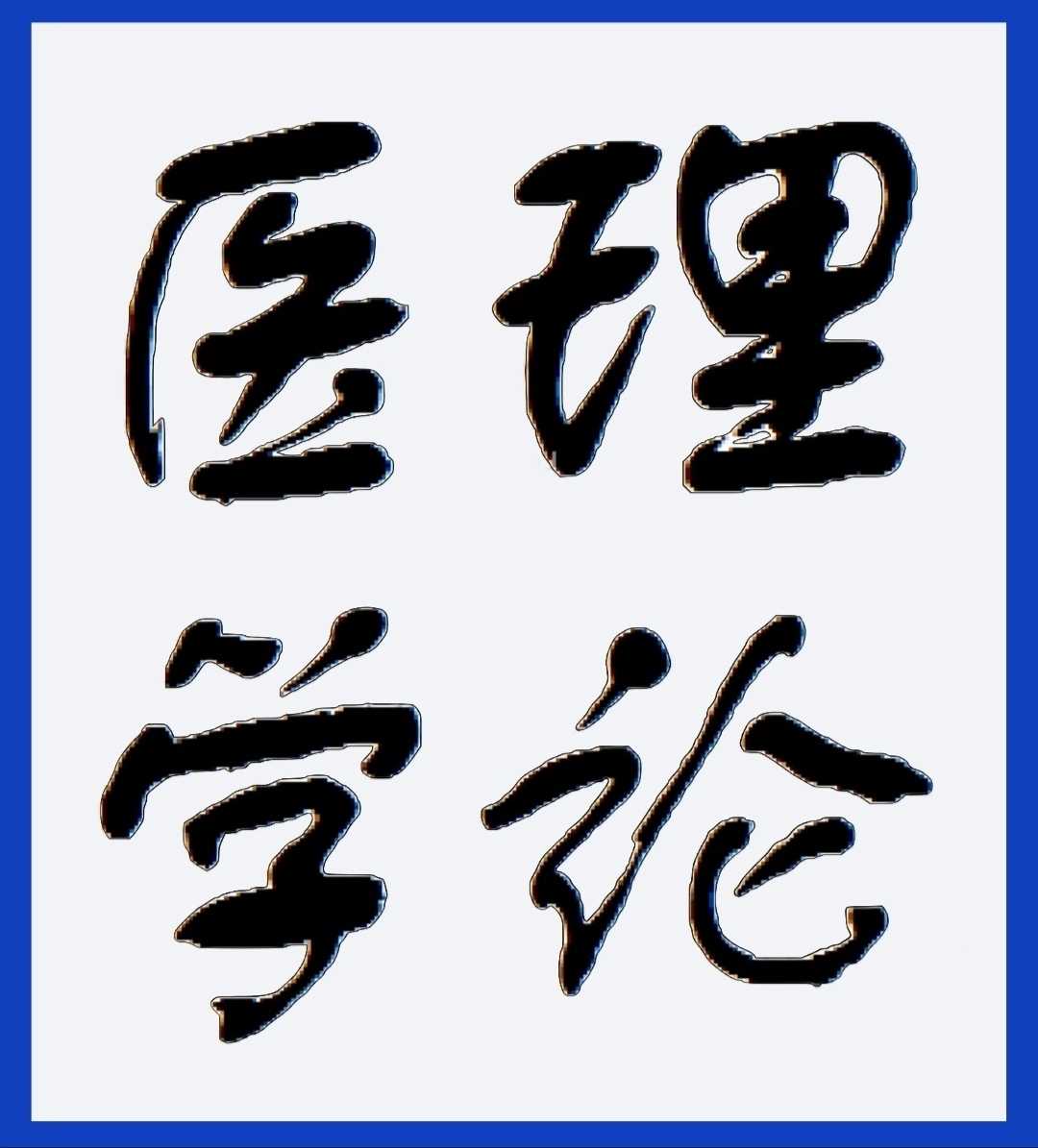
《傷寒論》、《金匮要略》、《平脈法》、《辨脈法》与《可與不可》的作者是汉代的张仲景,这五篇著作统称《傷寒》,其中的《傷寒論》是最重要的,因为它包含了《傷寒》所有的基础理论。本书是为解释《傷寒》而作的,由于书中的内容都是医学理论,基本不涉及临床的案例,故以《理论医学》作为书名。
《傷寒》用系統功能的观点论证病理现象,辩证的方法与传统中医学不同;因此用传统中医学的理论是无法解释它的内容的。自《傷寒》问世以来,没有人真正了解《傷寒》的理论体系,以致中医学理论停滞不前,始终没有取得什么进展。由于现代的中医理论比较抽象,逻辑性不强,因此有很多人认为中医不科学。
坚实而深邃的理论基础、超前的医疗思想、严密的逻辑思维、与临床医学的紧密结合、以及对疾病本质的深刻认识,是《傷寒》的特点。可以这样说,要实现中医科学化,《傷寒》是唯一的突破口,因此必须将《傷寒論》研究提升到新的层面,才有可能要实现这一目标。
本书以现代的数理逻辑为基础,通过建模的方法,从《傷寒》本身建立起一套系統性的生理学、病理学、脉学与药理学的理论,只有这样才有可能深入理解《傷寒》论述的病症、脉象以及相关的治疗方法。
以下介绍《傷寒論》的一些基础理论,目的是让读者对《傷寒》的理论体系有基本的认识。
《傷寒》的功能系統包括抗病功能系統,循环系統与自反应系統。病人感染疫病后,病原释出毒素,破坏机体的的器官组织后产生大量的病积(留聚在体内并等待排出的病理性物质)。病积释入循环系統后,循环系統的病积水平高,自反应系統会通过抗病功能系統调控循环系統的病积水平。
《傷寒》的循环系統包括水液、津液与营血循环系统,机体必须通过循环系統输送并排出病积;由于机体抗病过程会消耗大量的水液、津液与营血,使循环系統超载而弱化,导致抗病功能系統的水液、津液与营血的供应量减少,输积、排积的能力变差,因此《傷寒》认为治病必须先整合、强化循环系統。
由于水液、津液与营血的流速与流量对抗病功能系統输积、排积的能力至关重要,《傷寒》非常重视水液、津液与营血的流速与流量的控制,因此用于整合、强化循环系統的药方,组方用药的方式与流体动力学的原理是相符的。
由于水液、津液与营血循环系统超载的程度时轻时重,病积水平或高或低,功能有强有弱,因此病人的症状与脉象会出现动態的变化。与慢性病相比较,传染病的病理状态,动態的变化非常明显,因此医生必须时时观察病人脉象与症状,并根据病人在不同时段的病理状態用不同的药方治疗,想要用一种药物或一个药方治疗传染病是不切实际的。
机体通过程序化的信息控制抗病功能系統的输积与排积功能,控制病积的程序有两种,即特殊程序与一般程序。如果病原的毒性强,破坏力大,病积生成率高(例如流感病毒),在这种情况下自反应系統会启用特殊控积程序,目的是加强抗病功能系統的输积与排积的功能,避免病积堵塞在器官组织与循环系統的通道,导致抗病功能系統不能正常运作。
如果传染病原的性质较为温和(例如感冒病原),对机体的器官组织的破坏力不大, 由于病积生成率相对低,在这种情况下自反应系統只须执行一般控积程序,不会执行抗病能力强大的特殊程序,因为特殊程序的执行过程循环系統的工作量大,容易导致循环系統超载而弱化。
抗病程序的执行以 6 天为 1 期,一般情况下机体只须执行一期的程序,这是大多数的病人在 1 星期内就会痊愈的原因。如果病积的生成率大而抗病系統功能不足,机体就有可能需要执行多期的抗病程序。特殊程序的执行过程,机体抗病力度强大,病 人反映的恶寒、发热与头痛症状非常严重,因为这些症状都是抗病现象。一般程序的执行过程,机体的抗病力度相对小,病人的症状较轻。年老或体弱的病人,抗病系統功能低弱,机体没有能力执行抗病程序,因此不会反映出相关的症状。
输布于机体各处并参预系統功能的流动性物质称为‘阴液’,阴液包括水液、津液、营血等体液,气液是阳气与阴液的合称,阳气的作用是调控阴液的供应量。精气是食物消化后生成的精微物质,机体机体通过精气生化气液,《傷寒》认为机体存在一个能够储存精气的后备系統,当抗病功能系統的气液供 应量不足时,精气就会从后备系統释放出来,因此可以加强机体生化气液的能力。
机体须要仰赖后备系統精气的病理状态称为‘阴病’,不须要仰赖后备精气的状态称为 ‘阳病’。如果抗病功能系統对后备精气的需求量大,导致后备系統严重超载,病人会感觉极度的疲劳,这是机体亮出红灯警示,因此这种感觉不是通过睡眠能够消除的。
慢性病背景下,这样的病理状態即现代医学的慢性疲劳综合症。传染病背景下,这样的病理状態《傷寒論》称为“少阴病”,由于病积生成率大,机体输积、排积的过程抗病气液消耗量多,病人出现少阴病后,后备精气的需求量非常大,因此会使后备精气供应系統严重超载而快速弱化,导致抗病功能系統的气液供应量衰减,机体因 而失去抗病能力,因此少阴病是病人死亡的主因。
《傷寒論》认为回归热也是一种阴病,病人出现回归热时,发热与寒冷的症状会交替出现,发热期与寒冷期一般为 4-6 天,不论是发热期与寒冷期,期间病人会出现不同的病理状態,这些病理状態都有对应的治疗方法。
《傷寒論》的医学思想是超前的,它的理论体系完整而严密,对疾病本质的理解已经超过现代医学。
The theoretical system and characteristics of "Shanghan"
“Shanghan Lun(Note),” “Essentials from the Golden Chamber,” “Pulse Diagnosis,” “Pulse Differentiation,” and “What Can and Cannot Be Done” were written by Zhang Zhongjing of the Han Dynasty. These five works are collectively known as “Shanghan ,” with “Shanghan Lun” being the most important because it contains all the fundamental theories of “Shanghan.” This book was written to explain “ShangHan.”. Because the content is primarily medical theory and contains few clinical cases, it is titled “Theoretical Medicine.”
Note:”Shanghan Lun ” is also translated as “Treatise on ShangHan” or “Treatise on Cold Damage.”
“Shanghan Lun uses a systemic functional perspective to demonstrate pathological phenomena, and its dialectical methods differ from traditional Chinese medicine; therefore, its content cannot be explained using traditional Chinese medicine theories. Since the publication of “Shanghan Lun”, no one has truly understood its theoretical system, leading to stagnation in the development of traditional Chinese medicine theory and a lack of progress. Because modern Chinese medicine theory is relatively abstract and lacks strong logic, many people consider Chinese medicine theory as unscientific.
The “Shanghan Lun” (Treatise on ShangHan) is characterized by its solid and profound theoretical foundation, advanced medical thought, rigorous logical thinking, close integration with clinical medicine, and profound understanding of the nature of diseases. It can be said that the “Shanghan Lun” is the only breakthrough point for achieving the scientification of Traditional Chinese Medicine; therefore, research on the “Shanghan Lun” must be elevated to a new level to achieve this goal.
This book, based on modern mathematical logic and physic, uses modeling methods to establish a systematic theory of physiology, pathology, pulse diagnosis, and pharmacology from the “Shanghan Lun” itself. Only in this way can we deeply understand the symptoms, pulse patterns, and related treatments described in the “Shanghan Lun.”
The following introduces some basic theories of the “Shanghan Lun”, aiming to give readers a basic understanding of its theoretical system.
The functional systems in the ShangHan include the disease-fighting system,the circulatory system,and auto-reaction system. When a patient is infected with an epidemic disease, the pathogen releases toxins that damage the body’s organs and tissues, resulting in a large amount of pathogenic substances. Once these pathogenic substances are released into the circulatory system, their levels rise. The auto-reaction system regulates these levels through the disease-fighting system.
The circulatory system in “ShangHan” encompasses the water, ‘jin fluid’ (the fluid in the circulatory system including lymph and white cell, but excluding blood and plasma), and nutrient blood systems. The body must transport and expel pathogenic accumulation through the circulatory system. Because the body’s disease-fighting process consumes significant amounts of water, jin fluid and nutrient blood, the circulatory system becomes overloaded and weakened. This reduces the supply of water, jin fluid, and nutrient blood to the disease-fighting system, impairing its ability to transport and expel pathogenic substances. Therefore, “ShangHan” believes that treating disease requires prior integration and strengthening of the circulatory system.
Since the flow rate and volume of body fluids, jin fluids, and blood nutrient are crucial to the disease-fighting system’s ability to transport and expel pathogenic factors, “Shanghan” places great emphasis on controlling these flow rates and volumes. Therefore, the prescriptions used to integrate and strengthen the circulatory system are formulated and administered in a manner consistent with the principles of fluid dynamics.
Because the degree of overload in the water, jin fluid, and nutrient blood circulatory system fluctuates, the level of pathogenic accumulation fluctuates, and the strength and weakness of the system vary, the patient’s symptoms and pulse condition undergo dynamic changes. Compared to chronic diseases, Therefore doctors must constantly observe the patient’s pulse and symptoms, and treat the patient with different prescriptions according to the patient’s pathological state at different times. It is unrealistic to try to treat infectious diseases with one drug or one prescription.
The body uses programmed information to control the influx and elimination of pathogens in its disease-fighting system. There are two types of disease-fighting programs: special programs and general programs. If the pathogen is highly toxic, destructive, and has a high accumulation rate (such as the influenza virus), the auto-reaction system will activate the special accumulation-control program. This aims to strengthen the influx and elimination of pathogens in the disease-fighting system, preventing accumulation from clogging organs, tissues, and the circulatory system, potentially disrupting the disease-fighting system.
If the pathogen is milder (such as the common cold), with less destructive power to organs and tissues, and a relatively low accumulation rate, the auto-reaction system only needs to execute the general accumulation-control program and avoids the more powerful special programs. These programs place a heavy workload on the circulatory system, potentially overloading and weakening it.
The disease-fighting program is executed in six-day cycles, and the body generally only needs to complete one cycle. This is why most patients recover within a week. If the accumulation of pathogenic factors is high and the disease-fighting system is insufficient, the body may need to undergo multiple stages of disease-fighting program.
During the special programs stage, the body’s resistance is strong, and the patient’s symptoms of chills, fever, and headaches are very severe, as these are manifestations of disease resistance. During the general programs stage, the body’s resistance is relatively weak, and the patient’s symptoms are mild. Elderly or frail patients have a weak immune system and are unable to execute the disease-fighting program, so they do not experience the associated symptoms.
The fluid substances that are distributed throughout the body and participate in systemic functions are called “yin fluids.” Yin fluids include water, jin fluids, and nutrient blood. “Qi and fluids” are the collective term for “yang qi” and “yin fluids”. The function of “yang qi” is to regulate the supply of “yin fluids”. “Essence Qi” are the refined substances produced after food digestion. The body uses these “Essence Qi” to transform into “Qi and Fluid”.
ShangHan suggests that the body has a reserve system that stores “Essence Qi”. When the “Qi and Fluid” supply to the disease-fighting system is insufficient, “Essence Qi” are released from this reserve system, thereby enhancing the body’s ability to generate “Qi and Fluid”. Pathological conditions in which the body relies on this reserve system are called “Yin diseases,” while those that do not are called “Yang diseases.” If the disease-fighting system’s demand for reserve “Essence Qi” is excessive, causing the reserve system to become severely overloaded, the patient will experience extreme fatigue, a warning sign from the body that cannot be alleviated by sleep.
In the context of chronic diseases, this pathological condition is what modern medicine calls chronic fatigue syndrome. In the context of infectious diseases, the Treatise on ShangHan calls this pathological condition “Shaoyin disease.” Due to the high rate of accumulation of pathogenic factors, the body consumes a large amount of pathogenic “Qi and fluids” during the process of transporting and expelling these factors.
When a patient develops Shaoyin disease, the demand for their reserve vital energy is extremely high. This severely overloads the reserve vital energy supply system, rapidly weakening it. This leads to a decrease in the “Qi and fluid” supply to the disease-fighting system, resulting in a loss of the body’s ability to fight disease. Therefore, “Shaoyin disease” is the primary cause of death.
The “ShangHan Lun” considers relapsing fever a yin disease. When a patient develops relapsing fever, fever and chills alternate, typically lasting four to six days. During each period, the patient experiences different pathological conditions, each with its own corresponding treatment.
The medical philosophy of the “ShangHan Lun” was advanced, its theoretical system complete and rigorous, and its understanding of the nature of disease surpasses that of modern medicine.